Next Generation Glycoengineering for Better Biologics
Drug Design with GlycoTemplating
Augment's AI-enabled glycoprotein engineering platform uses deep learning to predict and genetically program site-specific glycosylation. GlycoTemplating writes desired glycan structures directly into a biologic's DNA — turning a hard-to-control lever into a designable parameter from the first line of sequence.
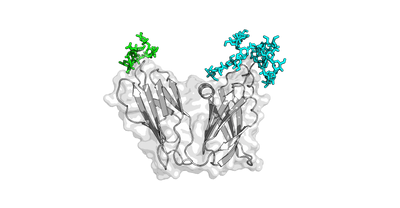
GlycoTemplating Controls Glycosylation & Glycan-Mediated Behaviors
GlycoTemplating controls glycosylation & glycan-mediated DMPK.
GlycoTemplating uses glycosite-proximal amino acid substitutions to control glycosylation without cell or media engineering
Effective Across Biologics Modalities
Antibody-based therapeutics (mAb, bi-/tri-specifics, ADC), large serum proteins, peptides, enzymes.
GlycoTemplating is the only option for glycoengineering and DMPK control in pre-translation modalities (i.e., mRNA and gene therapy payloads)
Application Across the Development Lifecycle
Screening
Candidate Prioritization
Candidate Prioritization
Candidate Prioritization
Candidate Prioritization
Candidate Prioritization
Lead Optimization
Lifecycle Management
Lifecycle Management
Lifecycle Management
Lifecycle Management
Lifecycle Management
Control D.I.A.L. Drug Properties with Ease
D. Durability
I. Immunogenicity
I. Immunogenicity
Glycans are a critical determinant of half-life. GlycoTemplating programs the glycan structures that extend circulation and stabilize biologics in vivo. We are designing durability into the molecule itself rather than retrofitting it.
I. Immunogenicity
I. Immunogenicity
I. Immunogenicity
Glycans govern how the immune system reads a therapeutic. By programming glycan structure at the DNA level, GlycoTemplating tunes immunogenicity by design. Thereby reducing unwanted anti-drug antibodies (ADA) and mitigating dangerous immune responses
A. Autoimmune
L. Liver de-localization
L. Liver de-localization
GlycoTemplating has achieved a long-sought-after immunomodulatory Fc for autoantibody-modulated I&I indications. We are engineering glycan structures that actively reprogram inflammatory pathways, opening new therapeutic opportunities in autoimmune disease.
L. Liver de-localization
L. Liver de-localization
L. Liver de-localization
Terminal glycan structure dictates where a biologic goes and how fast the liver clears it. By genetically programming site-specific glycosylation, Augment redirects biodistribution away from hepatic capture — extending exposure and expanding the therapeutic window.
Contact Us
Augment Biologics
Dogpatch, San Francisco, CA, USA
info[at]augmentbiologics[dot]com
This website uses cookies.
We use cookies to analyze website traffic and optimize your website experience. By accepting our use of cookies, your data will be aggregated with all other user data.